

If your electricity bill has increased recently and you’re not sure why, you’re not imagining it. Energy demand across PJM, the grid operator that covers Pennsylvania, has risen sharply as large-scale AI data centers come online throughout the Mid-Atlantic region. For homeowners in Harrisburg, Lancaster, Lebanon, and York, that demand pressure translates directly into higher rates.
What AI Data Centers Have to Do With Your Electric Bill
Training and running large AI models requires enormous amounts of continuous power. A single large data center can consume as much electricity as a small city. As more of these facilities come online in Virginia, Maryland, and Pennsylvania, they’re competing for the same grid capacity that residential customers rely on.
PJM has flagged data center load growth as one of the primary drivers of rising capacity costs in recent years. Capacity charges, which reflect the cost of keeping enough power available to meet peak demand, get passed through to ratepayers. For most Pennsylvania households, that shows up as a higher supply charge on the monthly bill, often without a clear explanation from the utility company.
This isn’t a short-term spike. DOE projections show data center electricity demand continuing to climb through the decade. Grid operators are investing in new generation capacity to keep up, but that infrastructure takes years to build and gets priced into rates as it’s developed.
Why Solar Is a More Useful Hedge Than It Was Five Years Ago
When electricity was cheap and stable, the payback math on solar was straightforward but not urgent. As rates rise and become less predictable, generating your own power becomes more valuable because you’re offsetting energy at whatever the current retail rate happens to be, not the rate from when you signed a contract.
In Pennsylvania, net metering allows homeowners to send excess solar generation back to the grid and receive credit against future bills. When rates are higher, those credits are worth more. A system that made financial sense at $0.12 per kilowatt-hour makes more sense at $0.16 or $0.18.
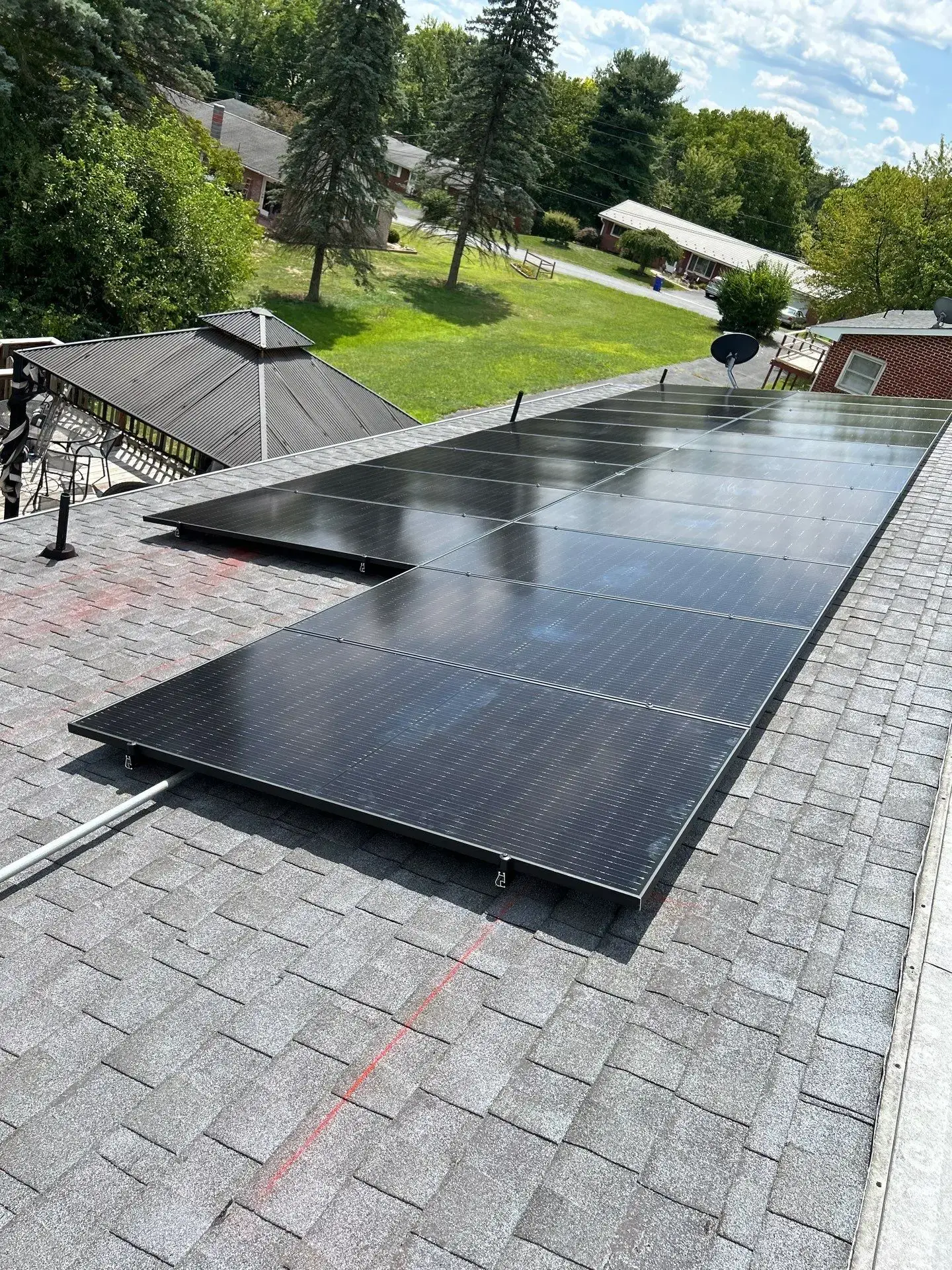
Pennsylvania offers additional incentives through the SREC market but with a finite window. Homeowners who install sooner start offsetting bills while they’re still climbing.
What This Means for South Central PA Homeowners Specifically
Pennsylvania sits within a grid region that is absorbing a significant share of new data center load. That’s not likely to reverse. Utilities in our region have already filed for rate increases tied in part to grid infrastructure investment, and more are expected.
For homeowners who have been watching solar from the sidelines, the calculus has shifted. The combination of rising rates and net metering makes this a more compelling moment than it was a few years ago. The solar incentives available in Pennsylvania in 2026 are worth understanding before those programs change.
At Topp Home, we help homeowners in South Central PA evaluate whether solar makes financial sense for their specific home, roof, and usage. Schedule a free solar analysis today and we’ll give you honest numbers.
