

Insulated vinyl siding typically provides an R-value between R-2.0 and R-3.5, depending on foam backer thickness. Standard vinyl siding alone provides essentially no insulation, roughly R-0.6. The difference comes from the expanded polystyrene (EPS) foam bonded to the back of insulated panels.
What R-Value Actually Means
R-value measures resistance to heat flow. The higher the number, the better the material resists heat moving through it in either direction, out in winter and in during summer. It’s additive: insulated siding’s R-value stacks on top of whatever your wall assembly already has.
A typical older Central PA home might have 2×4 walls with R-11 to R-13 fiberglass batt insulation. Adding R-3.0 insulated siding brings that wall to roughly R-14 to R-16, a real improvement, even if it doesn’t match a newly built home with 2×6 framing and deeper cavity insulation.
How Insulated Vinyl R-Value Is Measured
R-value for insulated siding products is tested under ASTM C518, the standard heat flow measurement method used across the insulation industry. The test measures the foam backer specifically. The vinyl face contributes negligibly on its own.
One important nuance: the R-value on a product spec sheet refers to the foam in isolation. In a real wall assembly, the continuous foam in insulated siding is actually more thermally effective per R-unit than cavity insulation, because it covers studs rather than sitting between them. The Department of Energy and the Vinyl Siding Institute both note this advantage of continuous insulation over framed cavity insulation.
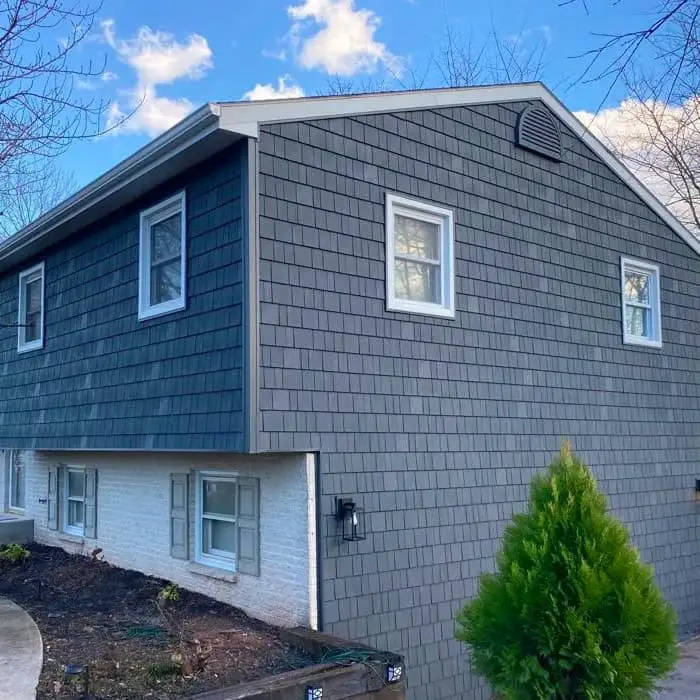
Specific products worth knowing: CertainTeed CedarBoards delivers approximately R-2.0 to R-3.0 depending on the profile. Mastic Structure comes in at around R-2.0. ProVia CedarMAX reaches R-3.5 with its full-thickness foam backer.
How Much Do You Actually Save in Central PA?
The energy savings are real but modest for most homes. Upgrading from standard to insulated vinyl might reduce annual heating and cooling costs by $75–$200, depending on your home’s existing insulation level and air sealing. Homes that benefit most are older construction with thin or degraded cavity insulation, or west- and south-facing exposures with high summer solar gain.
If you’re already replacing your siding, the incremental cost of choosing an insulated product is typically $1.50–$3.00 per square foot, a manageable upcharge for a long-term improvement. The energy savings alone may not close that gap in pure payback terms, but insulated vinyl also stiffens the panel, reduces noise, and improves impact resistance — all benefits that matter independent of the R-value.
Is the R-Value Worth the Extra Cost?
For most Central PA homeowners replacing siding, yes, but the full case goes beyond the thermal numbers. The foam backer reduces the wave appearance common on standard vinyl, dampens exterior noise, and improves dent resistance in hail-prone areas like Dauphin, Lebanon, and Cumberland counties. Those benefits hold up over a 20-year ownership window regardless of what happens to energy prices.
For a full cost comparison between insulated and standard vinyl, including realistic 2026 pricing, see our companion piece on whether the insulated vinyl upgrade is worth it.
At Topp Home, we install insulated vinyl siding from ProVia and other leading manufacturers throughout Central PA. Schedule a free inspection and price quote today and we’ll walk through which products make sense for your home.
