
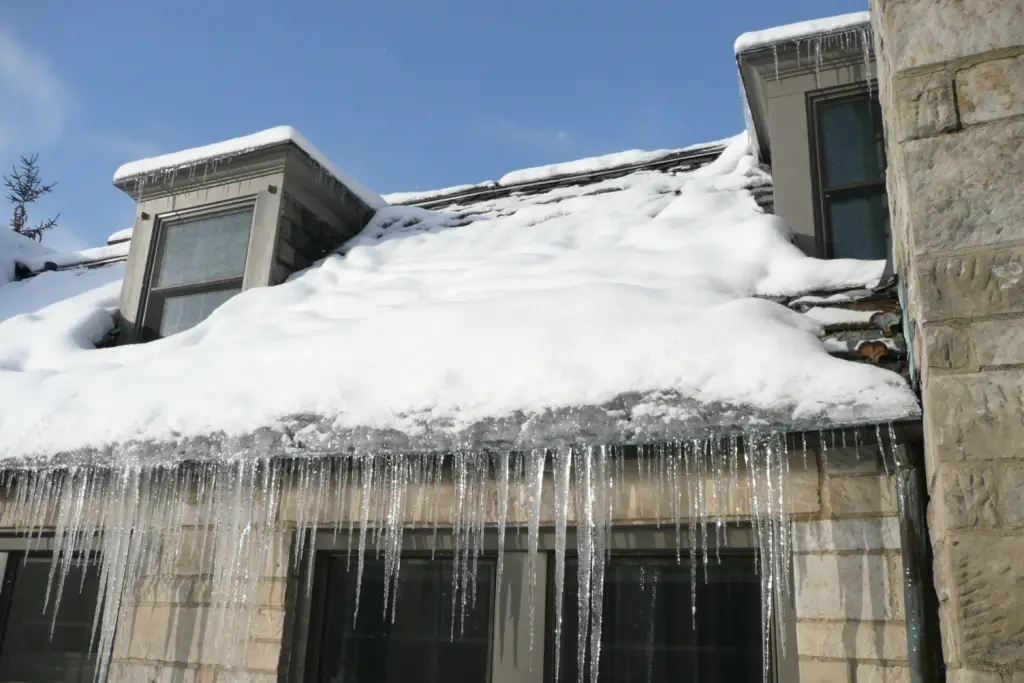
Ice dams might look picturesque along your roofline—but for homeowners in Harrisburg, Lancaster, Lebanon, York and surrounding areas, they’re one of winter’s most dangerous and costly threats to your home. These thick ridges of ice form at the edge of your roof and can lead to everything from leaks to structural damage if not addressed quickly.
At Topp Home, we’ve seen firsthand how damaging ice dams can be—and how preventable they are with the right roofing system, insulation, and ventilation. Here’s what you need to know about how ice dams form, what kind of damage they cause, and how to keep them off your roof for good.
What Causes Ice Dams?
Ice dams occur when snow on the upper portion of your roof begins to melt—often due to heat escaping from the attic. That water flows down the roof but hits the colder eaves near the edge, where it refreezes. Over time, this process creates a thick ridge of ice that blocks additional meltwater from draining off the roof.
When that water backs up behind the dam, it can seep under shingles and into your home—even if your roof is only a few years old.
The Risks of Ignoring Ice Dams
While they might seem like a seasonal nuisance, ice dams can cause serious—and expensive—problems, such as:
- Water leaks inside your home
- Damaged drywall and ceiling paint
- Rotted roof decking or attic framing
- Mold and mildew in insulation
- Shortened roof lifespan
These issues can lead to interior repairs that cost thousands of dollars and aren’t always covered by insurance, especially if damage is traced to poor maintenance.
How to Prevent Ice Dams
Prevention starts with understanding your roof’s “thermal envelope”—the interaction between insulation, air sealing, and ventilation. If heat is escaping into the attic, it warms the roof and accelerates snow melt. The key is to keep the roof cold and the warm air where it belongs.
Here’s how to stop ice dams before they start:
- Improve attic insulation: Boosting insulation reduces heat transfer to the roof deck.
- Seal attic air leaks: Gaps around ducts, recessed lights, or chimneys allow heat into the attic.
- Ventilate properly: A well-ventilated attic allows cold outside air to circulate and maintain an even roof temperature.
- Clear snow safely: Use a roof rake to remove heavy snow before it melts and refreezes at the eaves.
- Install ice & water shield: This protective membrane under the shingles helps block water intrusion from melting ice.
Professional Solutions from Topp Home
In some homes—especially older ones—DIY measures might not be enough. That’s where Topp Home comes in. We assess your attic ventilation, roof structure, and insulation to develop a custom prevention plan that fits your home.
We can also upgrade your roofing materials with features like:
- Self-sealing underlayment
- High-performance attic vents
- Insulated attic hatches
- Heated gutter guards (when necessary)
Don’t wait for icicles to turn into leaks. Schedule a winter roof assessment with Topp Home and stop ice dams before they start.
